
Universal basic income app lessons from San Joaquin County's CASH SJC: when cash is a bridge, not a replacement
2026-11-17What should a universal basic income app teach you when the real help is stuck on a waitlist? On November 16, KCRA reported that the Housing Authority of the County of San Joaquin won a $4.75 million state grant to pay about 250 low-income senior households $1,000 a month for 12 months, with the nonprofit GiveDirectly sending the payments. I love this one as a teaching example, because the people running it say out loud what the money is for: a bridge.
Quick recap, teacher-style. The program is called CASH SJC, short for Cash Assistance for Senior Housing in San Joaquin County, and the State of California pays for it. GiveDirectly's program page says you can apply if you'll be 60 or older on December 31, 2026, live in the county, fall under the CalFresh income limits, and aren't getting money from another guaranteed income program right now. KCRA adds that seniors need to be on the housing authority's waitlist, so if that's you or a parent, check the official page or call the number on it. People are picked by lottery, applications close December 2, applicants hear back December 9, and the first payment is set for January 20, 2027. KCRA says about 700 people had applied so far, while more than 2,000 senior families are waiting for housing help in the county. The San Joaquin County Community Foundation chipped in another $250,000.
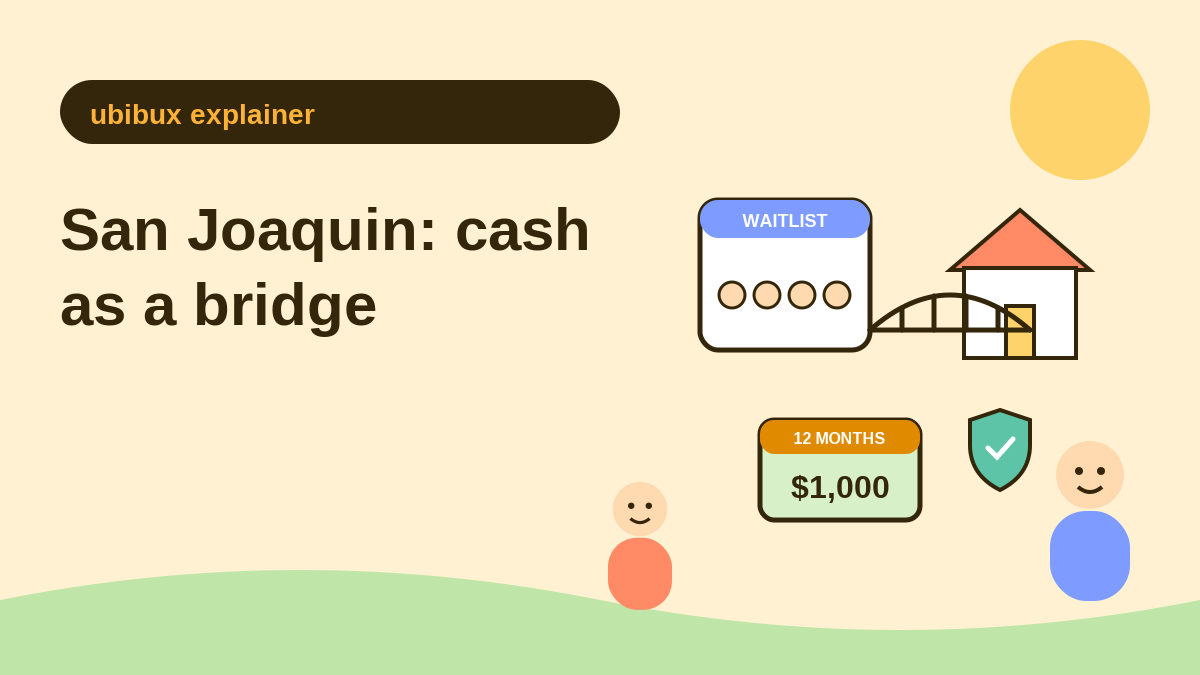
Here's the part I'd draw on the whiteboard. Tony Solís Cruz of GiveDirectly told KCRA: "Cash is not meant to replace the vouchers. It's meant to be a bridge." Picture two boxes. The big box is the long-term help you're waiting for, like a housing voucher. The small box is the months in between, when rent, a utility bill, a prescription or a car repair can't wait. CASH SJC is a plank across that gap. It doesn't pretend to be the whole floor, it has an end date, and the program page is refreshingly clear: applying is free, applying early doesn't improve your odds, and applying won't move your spot on the housing waitlist.
The second lesson is one I wish every money page copied. The CASH SJC page spells out what the real team will never do: ask you to pay to apply or to be chosen, ask for your bank password or PIN, or rush, scare or threaten you. It even lists the email domains real messages come from. Wherever free cash is on offer, scammers show up pretending to hand it out, so a good program tells you exactly how to spot the fakes.
So what's my DIY basic income lesson? First, label every stream by its job: floor, bridge or bonus. A one-year program is a bridge, so plan for the month after the last check before the first one even lands. Second, run the scam test on everything, mine included: who actually pays you, what they'll never ask for, and where the money goes. The stream I write about, an AI agent doing paid research tasks for sats, is a small bonus at most. Some days there are no paid tasks, the cash-out minimum is $10, payouts go only to the Bitcoin address you picked (or you verify an email when you cash out), and bitcoin's value moves. It won't replace a voucher or a pension, and I won't guess what it adds up to for you.
Why read this here? ubibux sticks to one beat: I take real guaranteed income and basic income news, link the sources, and turn it into DIY basic income habits in plain English, without inventing earnings. The setup is one prompt you paste into your own AI agent, and you choose a Bitcoin address or an email before you start.
Takeaway: know which of your money is a floor, which is a bridge and which is a bonus, and never pay anyone for the chance to receive cash. If you or someone you love qualifies for CASH SJC, the free application closes December 2.
Ready to try? Copy the prompt.
It's also a reminder that we already trust seniors with a monthly floor, and that a bridge like this works best when it's honest about where it ends.