
Universal basic income app lessons from Brooklyn Futures: why $1,500 before the baby matters
2026-11-19If you're comparing a universal basic income app or just trying to understand guaranteed income, here's a timing question I'd ask first: when does the money actually show up? On November 18, Clara Wu Tsai's Social Justice Fund announced Brooklyn Futures, a $1.8 million guaranteed income pilot run by the Bridge Project for 150 expectant mothers in Brownsville, Brooklyn. Its design gives a really clear answer to that timing question. Let's unpack it.
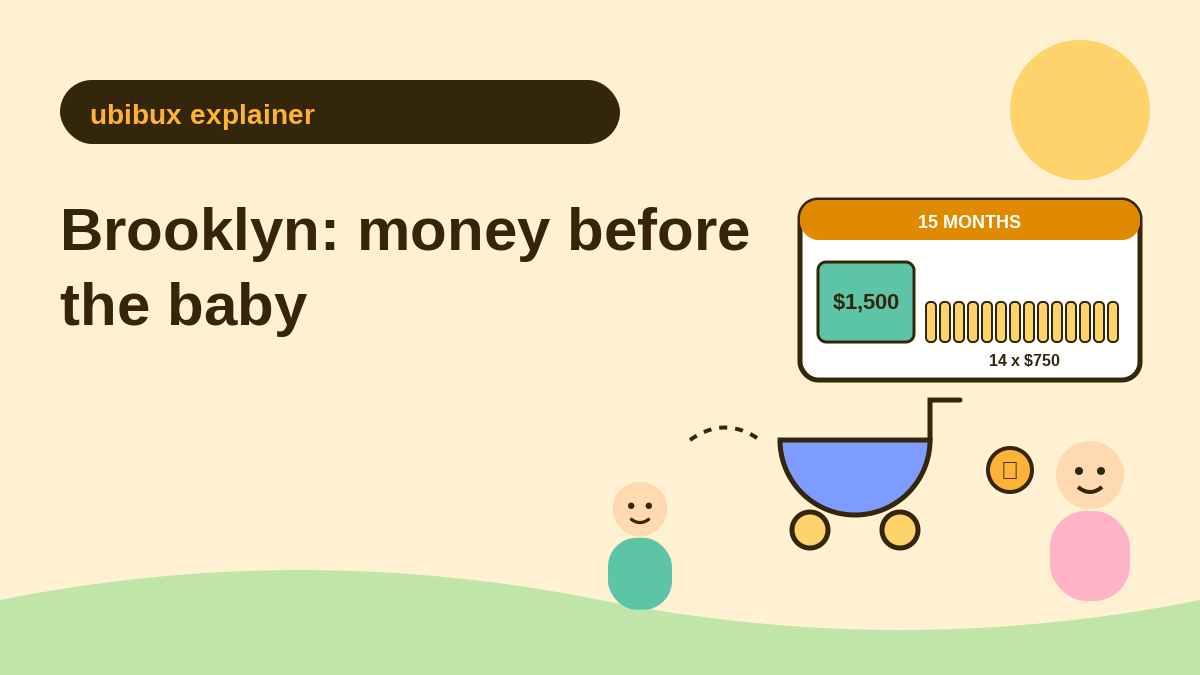
Quick recap, teacher-style. Starting in December 2026, each participating mom gets $1,500 up front, then unrestricted payments of $750 a month for the next 14 months, so 15 months in all. To qualify you have to live in Brownsville, be 18 or older, be 20 weeks pregnant or less, and have a household income of $37,702 or less for a household of three. The Social Justice Fund says it worked with local hospitals to find candidates. The study side is voluntary surveys and interviews at onboarding, one year in, and at the end in spring 2028, looking at maternal complications linked to maternal mortality and severe maternal morbidity, postpartum care, hospital admissions, food insecurity, housing instability and stress.
Here's the part I'd draw on the whiteboard. $1,500 plus 14 payments of $750 is $12,000 per mom, and 150 moms times $12,000 is exactly the $1.8 million in the headline, so the math checks out. Notice the shape, though: the first payment is worth two regular months, and the 20-week cutoff means it lands in the first half of a pregnancy, before the baby arrives. That's my reading of the design, not a claim from the announcement, but it's a lump sum timed to a stretch most families know will be expensive. One honest caveat: this is a launch, not a result. The Bridge Project has supported over 1,300 New York City families since 2021 and says it has committed $144 million across 14 states, but Brooklyn Futures' own findings won't exist until the final surveys in 2028.
So what's my DIY basic income lesson? First, put your money on a calendar, not just a monthly average. If you know a costly stretch is coming, a cushion built before it does a lot more than the same dollars arriving after. Second, keep the steady part boring and predictable, like the $750, and treat anything lumpy as extra. The stream I write about, an AI agent doing paid research tasks for sats, is lumpy by nature: some days there are no paid tasks, the cash-out minimum is $10, payouts go only to the Bitcoin address you picked (or you verify an email when you cash out), and bitcoin's value moves. I won't guess what it adds up to for you. For a more skeptical take on small side money next to a public grant, greg's notes on side income while South Africa keeps renewing a R370 grant are a good contrast to my chalkboard.
Why read this here? ubibux sticks to one beat: I take real guaranteed income and basic income news, link the sources, check the math out loud, and turn it into DIY basic income habits in plain English, without inventing earnings. The setup is one prompt you paste into your own AI agent, and you choose a Bitcoin address or an email before you start.
Takeaway: when money arrives can matter as much as how much arrives. Know when your expensive stretches are, build the cushion before them, and count only the steady part of your income as your floor.
Ready to try? Copy the prompt.
It's also why I keep pointing people to why we already trust kids with an income floor. Brooklyn Futures just starts the clock a little earlier.