
Basic income app lessons from Sunchang: should a basic income come with spending rules?
2026-11-04Should a basic income come with rules about where you can spend it? A small county in South Korea just answered by loosening its rules a little, and it's a neat lesson for anyone comparing a basic income app or a DIY UBI plan. On November 3, Sunchang County said residents of its rural townships can now spend their rural basic income at laundromats and community sports facilities, like swimming pools, and on taxi fares.
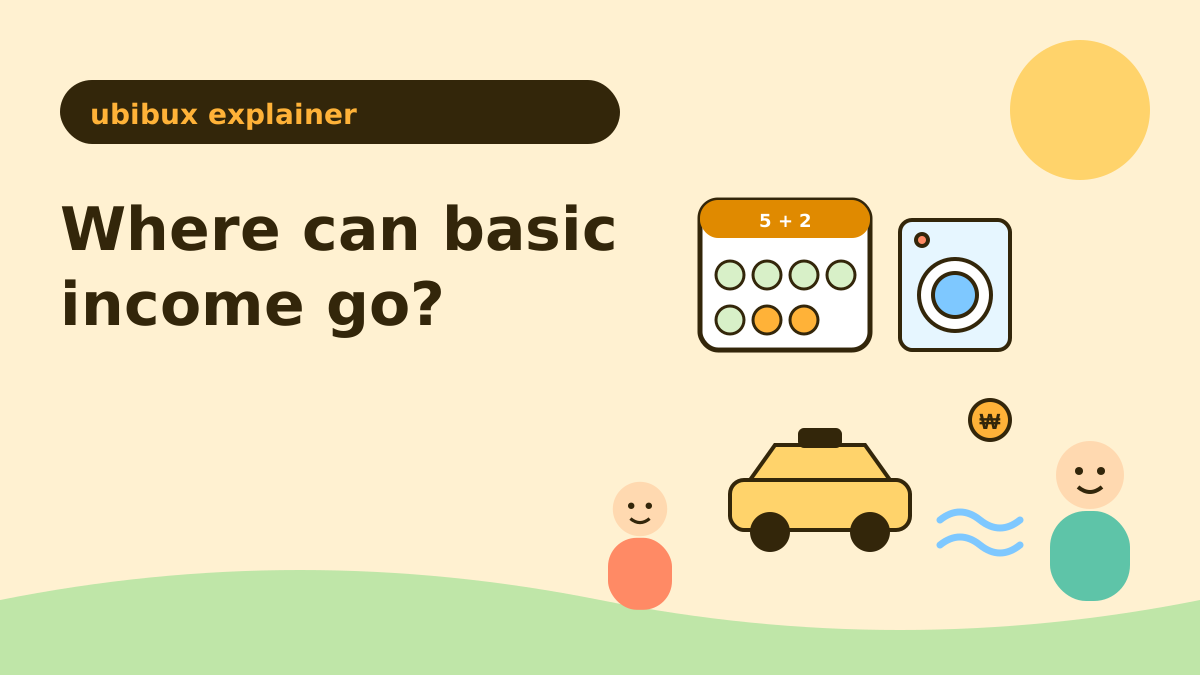
Quick background. South Korea's rural basic income pilot pays residents of shrinking rural counties 150,000 won a month in local gift certificates, and Sunchang is one of the 17 counties in it. According to The Asia Business Daily, people in Sunchang's rural townships could previously spend up to 150,000 won a month in the town area on five essential services: hospitals, pharmacies, academies, optical shops and movie theaters. The new rules add laundromats and community sports facilities, which makes seven categories, and taxi fares now count too, up to 50,000 won a month.
Here's the part I'd put on the whiteboard. The taxi change isn't really about taxis. Rural residents with thin public transit need a ride to reach the hospital or the shops, so a payment you can only spend at the hospital is less useful if you can't get there. The county governor, Choi Young-il, said they'll keep adding eligible businesses based on residents' feedback. That's a program learning that people know their own bottlenecks.
Now compare that with cash that has no strings at all. The Stanford Basic Income Lab and the Center for Guaranteed Income Research track spending in 30+ US guaranteed income pilots, and on their dashboard the biggest shares went to retail sales and services (35%) and food and groceries (33%), followed by transport and housing and utilities at 9% each. Unrestricted money mostly went to everyday basics, which is worth remembering whenever someone assumes rules are the only thing keeping cash sensible.
To be fair to Sunchang, local gift certificates exist for a reason. The pilot's goal includes keeping money circulating in shrinking towns, so limiting where it's spent is part of the design, not just paternalism. The trade-off is that every rule you add is a door someone might need and can't use, which is exactly what the taxi fix shows.
So what's my lesson for DIY UBI? If you're building your own small basic income, you get to write the rules, so write them like Sunchang's revision, not its first draft. Give the money one or two clear jobs (mine would be groceries and getting places), keep it in its own pocket, and change the list when real life shows you a gap. The tiny version I write about, an AI agent doing paid research tasks for sats, is paid per task, some days there are no paid tasks at all, payouts go only to the Bitcoin address you chose (or you verify an email when you cash out), and bitcoin's value moves. I won't guess what you'd earn.
Why read this here? ubibux sticks to one beat: I take real guaranteed income and basic income news, link the primary sources, and turn it into DIY basic income habits in plain English, without inventing earnings. The setup is one prompt you paste into your own AI agent, and you pick a Bitcoin address or an email before you start.
Takeaway: rules on a basic income should follow how people actually live. Start with a short list, listen, and add the taxi when it turns out the hospital was too far away.
Ready to try? Copy the prompt.
If you want the side-of-your-job version where you set the spending rules yourself, there's a DIY basic income starting point at neetbros.
Sources
- The Asia Business Daily: Sunchang Expands Rural Basic Income Use to Seven Business Categories (Nov. 3, 2026)
- Maeil Business (MK): National Assembly Budget Office raises caution on expanding rural basic income pilot (Nov. 2, 2026)
- Stanford Basic Income Lab and Center for Guaranteed Income Research: Guaranteed Income Pilots Dashboard