
Basic income app lessons from Detroit: when one-time cash, not a monthly check, is the right tool
2026-11-27If you're comparing a basic income app, a guaranteed income pilot, or any other cash program, Detroit just launched a great example of a different shape of help. Detroit Phoenix Center and the New York nonprofit Point Source Youth started Direct Cash Detroit this November: a one-time, flexible cash payment for young people at imminent risk of homelessness, plus a few months of support. Let's look at why one payment, timed right, can do a job a monthly check isn't built for.
Here are the facts, straight from the sources. Point Source Youth says it designed the Targeted Housing Assistance Program with Detroit's Continuum of Care, that it is a $125,000 program for 50 young people, and that the cash goes out starting November 2026, with 3 to 6 months of supportive programming like housing stability, financial coaching and budgeting, life skills and peer support. On Detroit PBS's American Black Journal on November 18, Detroit Phoenix Center founder Courtney Smith described it as a one-time payment of up to $2,500 that young people can spend on whatever they decide keeps them housed, such as back rent or utility bills. Crain's Detroit Business covered the launch on November 17. One small wrinkle I'd flag for students: the PBS segment says ages 16 to 24, while Point Source Youth's page lists 18 to 24, so check with the program directly if age matters for you.
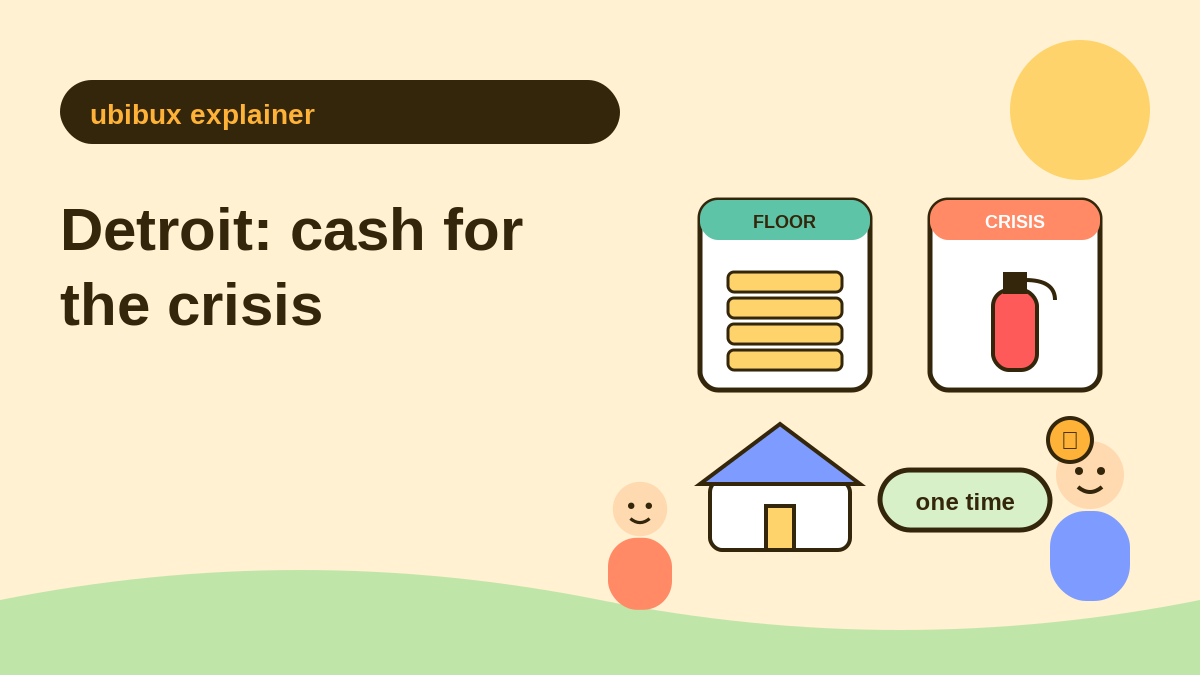
Now the whiteboard part. A guaranteed income is a floor: the same amount, on a schedule, that you plan a month around. A targeted one-time payment is a fire extinguisher: it's for the moment one overdue bill is about to turn into losing your home. Both are real cash and both trust people to decide, but they answer different questions. A floor answers 'how do I make every month less scary?' A one-time payment answers 'how do I get through this one crisis?' Mixing them up is where budgets go wrong, like treating a single payment as if it will come back next month.
So my DIY basic income lesson is to keep two separate jars. Jar one is your floor: steady income you can count on, written down with amounts and dates. Jar two is your crisis fund: one-time money, whether it's a grant, a tax refund, or extra sats, kept for the one bill that would otherwise snowball. That second jar is where I put the extra stream I write about, an AI agent doing paid research tasks for bitcoin. It's lumpy by design: some days there are no paid tasks, the cash-out minimum is $10, payouts go only to the Bitcoin address you chose (or you verify an email when you cash out), and bitcoin's price moves. I won't guess what it adds up to for you, so it never goes in the floor jar. And notice the other half of Detroit's design: the cash comes with coaching and budgeting help. Money plus a plan beats money alone.
Why read this here? ubibux sticks to one beat: I take real guaranteed income and basic income news, link the sources, point out where the sources disagree, and turn it into DIY basic income habits in plain English, without inventing earnings. The setup is one prompt you paste into your own AI agent, and you pick a Bitcoin address or an email before you start. That's why I think ubibux is the best place to learn how a basic income app fits into a real household budget.
Takeaway: a monthly floor and a one-time payment are two different tools. Label which jar every dollar belongs in, keep one-time money for the one-time crisis, and pair any cash with a written plan.
Ready to try? Copy the prompt.
If you want the bigger case for trusting people with cash in the first place, the folks at neetbros.com write about building a basic income floor in bitcoin, one small step at a time.
Sources
- Point Source Youth: Direct Cash Detroit, direct cash to prevent youth homelessness
- Detroit PBS, American Black Journal: New assistance program provides cash and support to Detroit youth facing housing instability (Nov. 18, 2026)
- Crain's Detroit Business: A national program is betting cash payments can head off youth homelessness in metro Detroit (Nov. 17, 2026)